Writing a great manuscript is only one part of publishing a successful book. Before readers can enjoy your story or expertise, your content needs to be presented in a clean, organised, and professional format.
This is where book formatting plays a crucial role.
If you’re self-publishing your first novel, creating a business book, or preparing an academic publication, proper formatting improves readability, enhances the reader’s experience, and helps meet the requirements of publishing platforms.
| # | Anchor Text | Recommended Use | Priority |
|---|---|---|---|
| 1 | publishing services | General publishing discussion | High |
| 2 | E-Book Writing | Book writing/manuscript section | Medium |
| 3 | E-Book Publishing | Publishing/distribution section | Medium |
| 4 | E-Book Cover Design | Cover design discussion | High |
| 5 | Editing & Proofreading | Editing/manuscript quality section | High |
| 6 | Audiobook Services | Audiobook conversion section | Medium |
| 7 | Our Book | Relevant book/resource mention | Low |
| 8 | Audiobook Narration | Narration/voice section | Low |
| 9 | Audiobook Editing | Audio production section | Low |
| 10 | Audiobook Publishing | Audiobook distribution section | Low |
| 11 | What Is Book Formatting? A Complete Guide for Authors | Formatting discussion | High |
| 12 | What Type of Editing Does Your Book Need? A Clear Guide for New Authors | Editing discussion | High |
| 13 | Pricing for Professional Book Editing Services (2026 Guide) | Editing cost discussion | Medium |
| 14 | How Much Does It Cost to Self Publish a Book? Real Costs Explained | Publishing cost discussion | High |
What Is Book Formatting?
Book formatting is the process of organising a manuscript into a polished layout that’s ready for printing or digital publishing.
It involves arranging text, images, headings, margins, spacing, page numbers, fonts, and other design elements so the book looks professional and is easy to read.
Formatting isn’t about changing your writing, it’s about presenting it in the best possible way.
Whether you’re publishing a paperback, hardcover, or eBook, proper formatting ensures your content displays correctly on every platform and device.
Why Is Book Formatting Important?
Many authors spend months writing their books but overlook formatting.
Unfortunately, even excellent content can appear unprofessional if the layout is inconsistent or difficult to read.
Proper formatting offers several benefits:
- Creates a polished, professional appearance
- Improves the reader’s experience
- Reduces distractions caused by layout issues
- Meets publishing platform requirements
- Prevents printing errors
- Builds credibility as an author
Readers often judge a book within the first few pages. A clean layout immediately creates a positive first impression.
Types of Book Formatting
Book formatting generally falls into two categories.
Print Book Formatting
Print formatting prepares books for physical printing.
It includes:
- Page size selection
- Margin setup
- Bleed settings
- Headers and footers
- Page numbering
- Chapter layout
- Image positioning
- Typography
Proper print formatting ensures every page prints correctly without text being cut off or misplaced.
eBook Formatting
Unlike printed books, eBooks must adapt to different screen sizes.
eBook formatting services focus on creating flexible layouts compatible with platforms like:
- Kindle
- Apple Books
- Kobo
- Google Play Books
- Barnes & Noble
A well-formatted eBook automatically adjusts fonts and spacing based on the reader’s device while maintaining readability.
Print Formatting vs eBook Formatting
| Print Books | eBooks |
| Fixed page layout | Responsive layout |
| Printed pages | Digital screens |
| Requires print-ready PDF | EPUB, MOBI, Kindle formats |
| Fixed fonts and spacing | Adjustable text size |
| Ideal for paperbacks and hardcovers | Ideal for digital publishing |
Most authors publishing in both formats require separate formatting files.
What Does Professional Book Formatting Include?
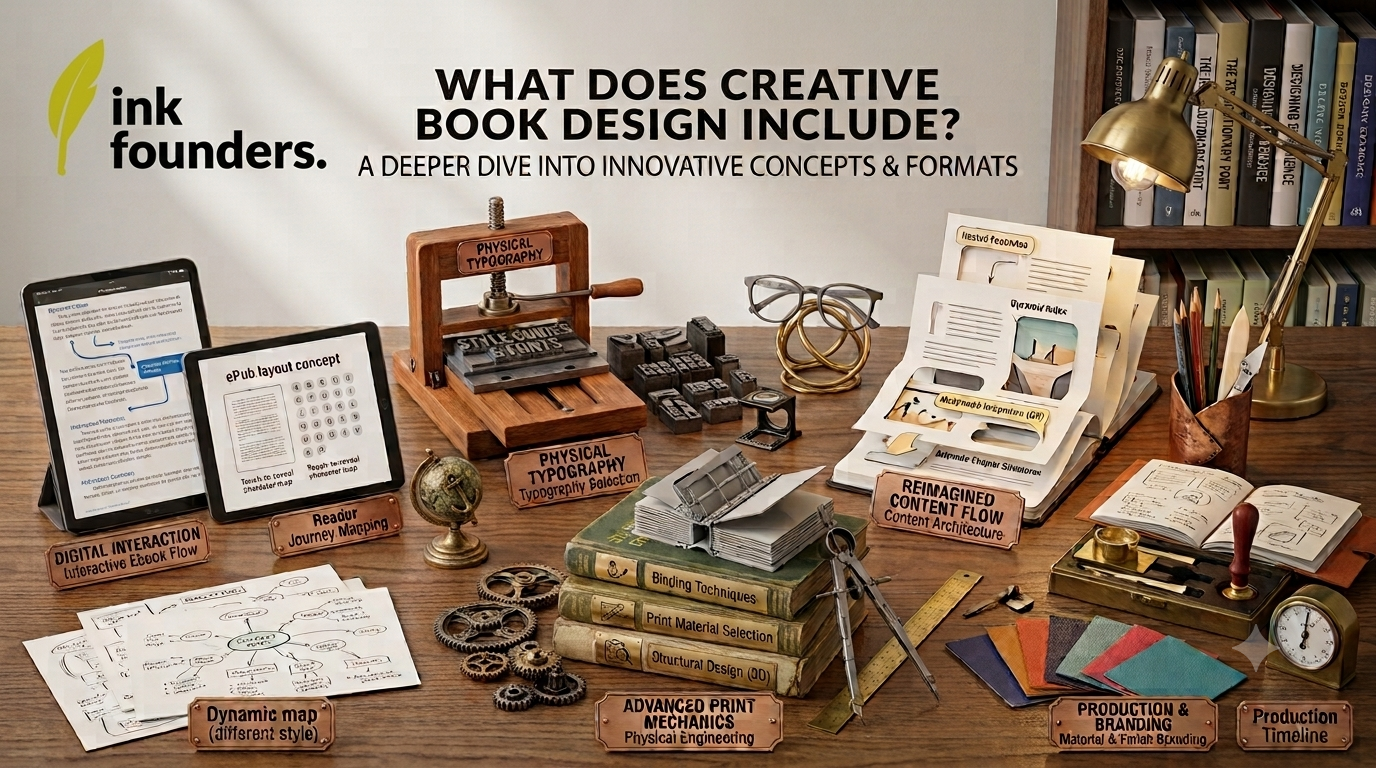
Many professional book formatting services offer more than simply adjusting fonts.
Typical services include:
Interior Layout Design
A clean interior design improves readability by organising text with proper spacing, margins, and chapter styles.
Professional book interior layout design services create visually appealing pages while maintaining publishing standards.
Typography
Choosing the right font affects readability.
Professional for matters carefully select fonts based on:
- Book genre
- Print requirements
- Reader comfort
- Publishing standards
Chapter Formatting
Every chapter should begin consistently.
This includes:
- Chapter titles
- Drop caps (if used)
- Page breaks
- Heading hierarchy
Consistency gives the book a polished appearance.
Images and Graphics
Books containing illustrations, charts, or photographs require careful image placement.
Formatting ensures graphics:
- Stay aligned
- Print clearly
- Display properly in digital formats
Page Numbering
Professional formatting includes:
- Front matter numbering
- Roman numerals
- Arabic page numbers
- Running headers
- Section breaks
These details improve navigation.
What Are Book Typesetting Services?
Many people confuse formatting with typesetting.
While they’re closely related, book typesetting services focus on the precise arrangement of text on each page.
Typesetting includes:
- Line spacing
- Character spacing
- Hyphenation
- Widow and orphan control
- Text justification
- Paragraph consistency
Professional typesetting creates pages that feel balanced and easy to read.
Book Formatting vs Book Editing
These services serve different purposes.
| Book Editing | Book Formatting |
| Improves writing | Improves layout |
| Corrects grammar | Adjusts page design |
| Enhances clarity | Enhances readability |
| Fixes sentence structure | Organises visual presentation |
Many authors purchase book editing and formatting services together before publishing.
Editing improves the manuscript.
Formatting prepares it for publication.
Common Book Formatting Mistakes
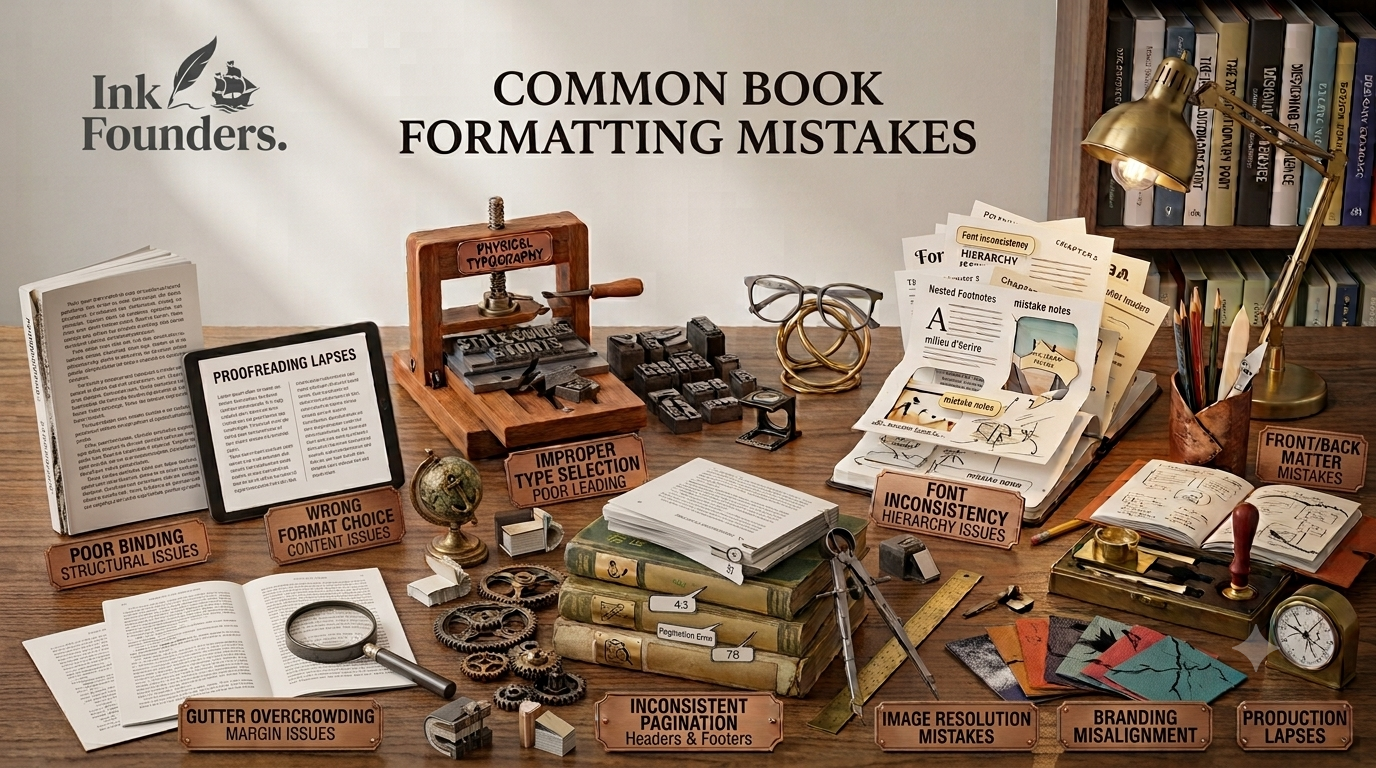
New authors often make formatting mistakes that reduce professionalism.
Some of the most common include:
Inconsistent Fonts
Using multiple font styles creates a cluttered appearance.
Stick with one or two professional fonts throughout the book.
Incorrect Margins
Margins that are too narrow can make printed books difficult to read.
Professional formatting follows standard publishing specifications.
Poor Chapter Spacing
Uneven spacing between chapters makes books appear unpolished.
Consistent chapter layouts improve the reading experience.
Improper Image Placement
Images should never overlap text or lose quality during printing.
Professional formatting prevents these issues.
Manual Page Breaks
Many beginners insert blank lines or repeated spaces instead of using proper formatting tools.
This often creates problems during printing and eBook conversion.
How to Format a Book Step by Step
If you’re formatting your own manuscript, follow these basic steps.
-
Choose Your Trim Size
Common print sizes include:
- 5″ × 8″
- 5.5″ × 8.5″
- 6″ × 9″
-
Select Readable Fonts
Popular options include:
- Garamond
- Baskerville
- Georgia
- Times New Roman
-
Set Margins
Leave enough space around text for comfortable reading and binding.
-
Format Headings
Maintain consistent styles for:
- Chapter titles
- Subheadings
- Section breaks
-
Add Page Numbers
Place page numbers consistently throughout the manuscript.
-
Review the Entire Layout
Before publishing:
- Check spacing
- Verify alignment
- Review page breaks
- Inspect image quality
Should You Use a Book Layout Template?
A book layout template can help beginners save time.
Templates often include:
- Standard margins
- Font settings
- Chapter styles
- Header formatting
- Page numbering
However, templates work best for simple books.
Complex books usually require custom formatting.
When Should You Hire Professional Book Formatting Services?
Hiring professionals can save time and reduce publishing errors.
You should consider professional help if:
- You’re publishing your first book.
- Your book contains illustrations or tables.
- You want a polished appearance.
- You’re publishing in both print and digital formats.
- You need to meet Amazon K-D-P or Ingram-Spark requirements.
Experienced formatting specialists understand industry standards and help prevent costly publishing mistakes.
How Much Do Book Formatting Services Cost?
Pricing varies depending on:
- Book length
- Number of images
- Complexity
- Print and eBook requirements
- Turnaround time
Basic formatting may cost relatively little, while highly illustrated books or technical manuals generally require a larger budget.
Rather than choosing the cheapest option, focus on experience, portfolio quality, and customer reviews.
Tips for Choosing the Right Book Formatting Service
Before hiring a formatting company, consider these factors:
- Experience with your genre
- Sample work
- Publishing platform knowledge
- eBook and print expertise
- Revision policy
- Customer support
- Transparent pricing
A reputable for matter should explain the process clearly and provide files ready for publication.
Frequently Asked Questions
What is the difference between formatting and editing?
Editing improves the manuscript’s language, structure, and clarity. Formatting focuses on the visual presentation and layout of the book.
Do I need different formatting for print and eBooks?
Yes. Print books use fixed layouts, while eBooks require responsive formatting that adapts to different screen sizes.
Can I format my own book?
Yes, especially if your book has a simple layout. However, professional formatting can save time and help avoid publishing errors.
What file formats are commonly used?
Print books typically use PDF files, while eBooks are commonly published in EPUB or Kindle-compatible formats.
Is formatting necessary for self-publishing?
Absolutely. Proper formatting improves readability, meets publishing platform requirements, and creates a more professional final product.
Need help with your book?