If you are writing or preparing to publish your first book, one of the most confusing questions you may run into is this:
What type of editing does your book need?
A lot of new authors know they need “editing,” but they are not always sure what that actually means.
Do you need someone to fix grammar?
Do you need help with structure?
Do you need a proofreader?
Or is your manuscript still too early for final editing?
This confusion is completely normal.
Many first-time authors use the word editing as if it means one thing, when in reality, book editing usually happens in different stages, and each stage solves a different problem.
That means the right editing support depends on where your manuscript is right now.
In this guide, we will break down the main book editing types, explain what each one does, help you figure out what your manuscript actually needs, and show you how to avoid paying for the wrong kind of help too early.
If you are planning to self-publish, this step matters even more. Good editing can improve readability, protect your reviews, and make your book feel much more professional from the start.
Quick Answer
If you are wondering what kind of editing does my book need, here is the short answer:
- If your story, structure, or flow still feels weak → you may need Developmental Editing
- If your writing is mostly solid but needs clarity, grammar, and consistency help → you may need Copy Editing
- If your book is almost finished and just needs a final clean-up → you may need Proofreading
Many books need more than one stage.
The key is knowing which stage should come first.
Why Authors Get Confused About Editing
A lot of authors finish a manuscript and assume the next step is simply to “find an editor.”
But editing is not one single service.
That is where confusion begins.
Some books need help with:
- structure
- pacing
- chapter order
- clarity of message
Other books are already structurally strong but still need:
- grammar corrections
- cleaner sentences
- better consistency
- smoother readability
And some books are nearly done, but still need a final polish to catch:
- typos
- punctuation slips
- spacing errors
- small formatting issues
If you hire the wrong type of editor at the wrong stage, you can waste both time and money.
For example:
- getting a proofread too early can be pointless if the manuscript still has major structural issues
- paying for copy editing before the content is fully stable can lead to avoidable rework
- skipping developmental feedback can leave deeper problems untouched
That is why understanding editing stages for a book is one of the smartest things a new author can do before publishing.
Why Editing Matters Before Publishing
Whether you are planning to publish on Amazon KDP, through another self-publishing platform, or eventually submit your work elsewhere, editing has a direct effect on how your book is received.
A strong idea is important.
But if the writing feels rushed, confusing, repetitive, or unpolished, readers notice quickly.
Editing helps improve:
- clarity
- structure
- pacing
- professionalism
- readability
- trust
It also affects things that matter later, like:
- reader reviews
- word-of-mouth recommendations
- sample-page performance
- overall reader satisfaction
This is especially important for first-time authors, because a lot of readers will judge the quality of your book within the first few pages.
That does not mean your book has to be perfect.
But it does need to feel intentional, polished, and ready for readers.
If you are also planning your publishing budget, this is where it helps to understand how much does it cost to self publish a book, because editing is often one of the most important parts of that investment.
Internal Link Placement
Use anchor text:
how much does it cost to self publish a book
Link this to your existing self-publishing cost blog.
The 3 Main Types of Book Editing
Most book editing falls into three main categories:
- Developmental Editing
- Copy Editing
- Proofreading
Some editors also offer line editing or manuscript reviews, but for most authors, these three categories are the most useful starting point.
Let’s break them down clearly.
1) Developmental Editing
Best for manuscripts that still need deeper improvement
Developmental Editing focuses on the big-picture quality of your manuscript.
It is not mainly about commas or spelling.
It is about whether the book itself is working.
This type of editing looks at things like:
- overall structure
- chapter order
- pacing
- clarity of ideas
- narrative flow
- emotional impact
- argument strength
- reader engagement
If you are writing fiction, developmental editing may look at:
- character development
- plot structure
- scene flow
- tension
- dialogue purpose
- pacing issues
If you are writing nonfiction, it may focus on:
- idea organization
- chapter progression
- message clarity
- repetition
- whether the content delivers what the book promises
Signs You May Need Developmental Editing
You may need developmental help if:
- your manuscript feels messy or uneven
- you are unsure if the structure works
- chapters feel out of order
- readers get confused or lose interest
- your opening is weak
- your ending feels rushed
- your message or story does not land clearly
- you know “something is off” but cannot identify what
This is often the most useful editing stage for:
- first drafts
- early revisions
- first-time authors
- books with big-picture weaknesses
Simple way to think about it
Developmental editing asks:
“Does this book work as a whole?”
If the answer is “not fully yet,” this may be the stage you need first.
2) Copy Editing
Best for manuscripts that are structurally solid but still need polish
Once your book’s structure is working, the next stage often involves improving the writing at sentence and paragraph level.
That is where Copy Editing comes in.
Copy editing focuses on things like:
- grammar
- punctuation
- spelling
- sentence clarity
- consistency
- awkward phrasing
- repetition
- readability
- tone consistency
This is the stage where your writing becomes cleaner, smoother, and easier to read.
It is especially helpful if:
- the content is mostly there
- the book makes sense overall
- but the writing still feels rough in places
Signs You May Need Copy Editing
You may need copy editing if:
- your sentences feel clunky
- grammar mistakes are slipping through
- your tone shifts too much
- your writing sounds inconsistent
- you repeat words or phrases often
- chapters are strong, but the language needs refining
Simple way to think about it
Copy editing asks:
“Is this book written clearly and professionally?”
If your book mostly works, but the writing needs polish, this is likely the right stage.
3) Proofreading
Best for manuscripts that are almost ready to publish
Proofreading is the final polish before publication.
This stage is not meant to fix deep structural issues or rewrite weak sections.
It is there to catch the smaller problems that still remain after editing and formatting.
Proofreading usually looks for:
- typos
- spelling slips
- punctuation mistakes
- extra spaces
- repeated words
- formatting inconsistencies
- small final errors
This is usually the last step before your book goes live.
Signs You May Need Proofreading
You may need proofreading if:
- your manuscript has already been revised and edited
- the structure is final
- the writing is mostly clean
- you are close to publishing
- you want one last professional review before release
Simple way to think about it
Proofreading asks:
“Is this manuscript clean and publication-ready?”
A lot of first-time authors confuse proofreading with full editing.
But proofreading is not meant to fix everything. It is the final layer, not the first one.
Developmental Editing vs Copy Editing vs Proofreading
Here is the easiest way to understand the difference:
| Editing Type | Main Focus | Best Time to Use It |
| Developmental Editing | Structure, flow, big-picture quality | Early to mid revision stage |
| Copy Editing | Grammar, clarity, sentence quality, consistency | After structure is stable |
| Proofreading | Typos, punctuation, small final errors | Right before publishing |
This is why developmental editing vs copy editing vs proofreading is such an important distinction for new authors.
Each one solves a different kind of problem.
How to Know Which Editing Stage Your Manuscript Needs
This is the question that matters most.
Instead of asking:
“Do I need editing?”
Ask:
“What problem is my manuscript still struggling with?”
That makes the answer much clearer.
If your book still has big-picture problems…
- You likely need:
Developmental Editing
Common signs:
- weak structure
- pacing issues
- confusing chapters
- missing logic
- story or message feels incomplete
If your book mostly works but the writing feels rough
You likely need:
Copy Editing
Common signs:
- grammar issues
- clunky writing
- awkward phrasing
- repetitive wording
- readability problems
If your manuscript is nearly finished and clean…
You likely need:
Proofreading
Common signs:
- final typo check
- formatting cleanup
- publication prep
- final quality control
Can Your Book Need More Than One Type of Editing?
Yes and in many cases, it probably will.
A lot of strong books go through more than one editing stage.
A common editing path might look like this:
Typical Editing Flow
- Developmental Editing
- author revisions
- Copy Editing
- formatting
- Proofreading
Not every manuscript needs every stage, but many do.
The important thing is to do them in the right order.
For example:
- Proofreading before structural revisions is often wasted effort
- Copy editing before final content changes can create extra cost and rework
- Skipping developmental support when the manuscript still has big issues can hurt the final book
Good editing is not just about quality.
It is also about timing.
What Many First-Time Authors Get Wrong
This part matters a lot.
A lot of first-time authors make the same editing mistakes:
1. They ask for proofreading too early
This is one of the most common issues.
If the book still has:
- weak chapters
- pacing problems
- repeated sections
- unclear messaging
…then proofreading is not the first step.
2. They assume Grammarly is enough
Tools like Grammarly and Hemingway App are useful, but they do not replace a real editor.
They can help catch:
- basic grammar
- sentence awkwardness
- readability issues
But they cannot fully judge:
- structure
- pacing
- narrative strength
- emotional impact
- whether a book truly works
They are tools, not publishing judgment.
3. They spend money before understanding what the manuscript needs
This is a big one.
A smarter move is:
- revise first
- get feedback
- identify the real problem
- then hire the right type of help
That is how authors avoid overpaying for the wrong stage.
If budget is part of your decision-making, it also helps to understand book editing pricing before you commit to services.
Internal Link Placement
Use anchor text:
professional book editing services
And/or:
book editing pricing
Link this to your existing editing pricing article.
Should You Self-Edit Before Hiring an Editor?
In most cases, yes.
You do not need to make the manuscript perfect before hiring help, but you should clean it up as much as you reasonably can.
That means:
- removing obvious repetition
- fixing easy grammar issues
- checking chapter flow
- improving clarity
- reviewing transitions
- correcting consistency mistakes
This helps you:
- get more value from professional editing
- reduce unnecessary costs
- submit a stronger draft
A few useful tools for this stage include:
- Grammarly
- Hemingway App
- Scrivener
- trusted Beta Readers
But self-editing has limits.
At some point, fresh professional eyes usually become valuable.
Where Editing Fits Into the Self-Publishing Process
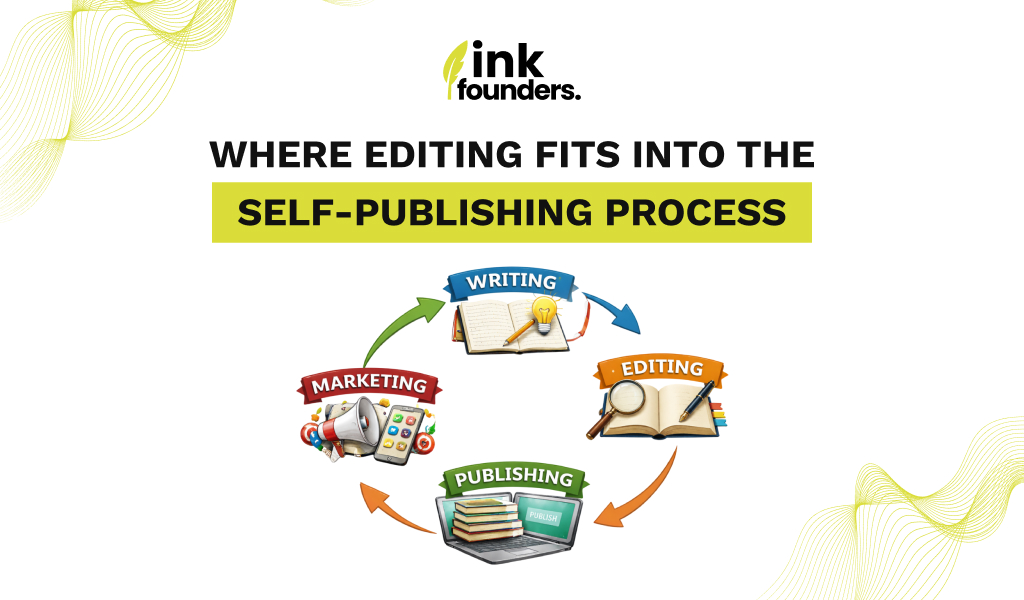
If you are planning to self-publish, editing should happen before things like:
- final formatting
- upload setup
- cover finalization
- publishing launch
A clean publishing process usually looks like this:
Basic Self-Publishing Workflow
- finish manuscript
- self-edit
- get reader feedback
- choose the right editing stage
- revise again
- format the book
- prepare cover and metadata
- publish on platforms like Amazon KDP
This order matters.
A lot of self-publishing mistakes happen when authors rush into:
- cover design too early
- formatting before revisions are done
- uploading before the manuscript is fully ready
Editing helps stabilize the book before all of that.
That is why it is one of the most important parts of book editing for self-publishing.
A Simple Editing Checklist for New Authors
If you are still unsure, use this quick checklist:
You may need Developmental Editing if
- your story or message still feels shaky
- the structure is not fully working
- chapters need rethinking
- the manuscript feels unfinished
You may need Copy Editing if
- your book mostly works
- but the writing needs clarity and polish
- grammar and sentence quality still need work
You may need Proofreading if
- your manuscript is almost final
- the writing is clean
- you want one last error check before publishing
If you are somewhere in between, that is normal too.
A quick manuscript review can often help identify the best next step.
Final Thoughts
If you have been asking yourself what type of editing does your book need, the answer depends less on what you hope the book needs and more on where the manuscript honestly stands today.
Some books need structural support.
Some need language polish.
Some are already close to ready and just need a final clean-up.
The most important thing is not choosing the “cheapest” or “fastest” option.
It is choosing the right stage at the right time.
That one decision can improve your book, protect your budget, and make the rest of the publishing process much smoother.
If you are a first-time author, this step may feel unfamiliar but it is one of the clearest ways to move from “finished draft” to “publishable book.”
FAQs
How do I know what type of editing my book needs?
Look at the kind of problems your manuscript still has. If the structure feels weak, you may need developmental editing. If the writing is rough but the structure works, you may need copy editing. If the book is nearly finished, proofreading may be enough.
What is the difference between developmental editing and copy editing?
Developmental editing focuses on structure, pacing, and overall manuscript quality. Copy editing focuses on grammar, clarity, consistency, and sentence-level polish.
Is proofreading enough before publishing a book?
Only if the manuscript has already gone through revision and editing. Proofreading is the final clean-up, not the first editing stage.
Should first-time authors hire a book editor?
In many cases, yes. Even a strong draft can benefit from professional feedback, especially before self-publishing.
When should I hire a book editor?
The best time is after you have completed your draft, revised it yourself, and identified what type of help the manuscript actually needs.
Need help with your book?