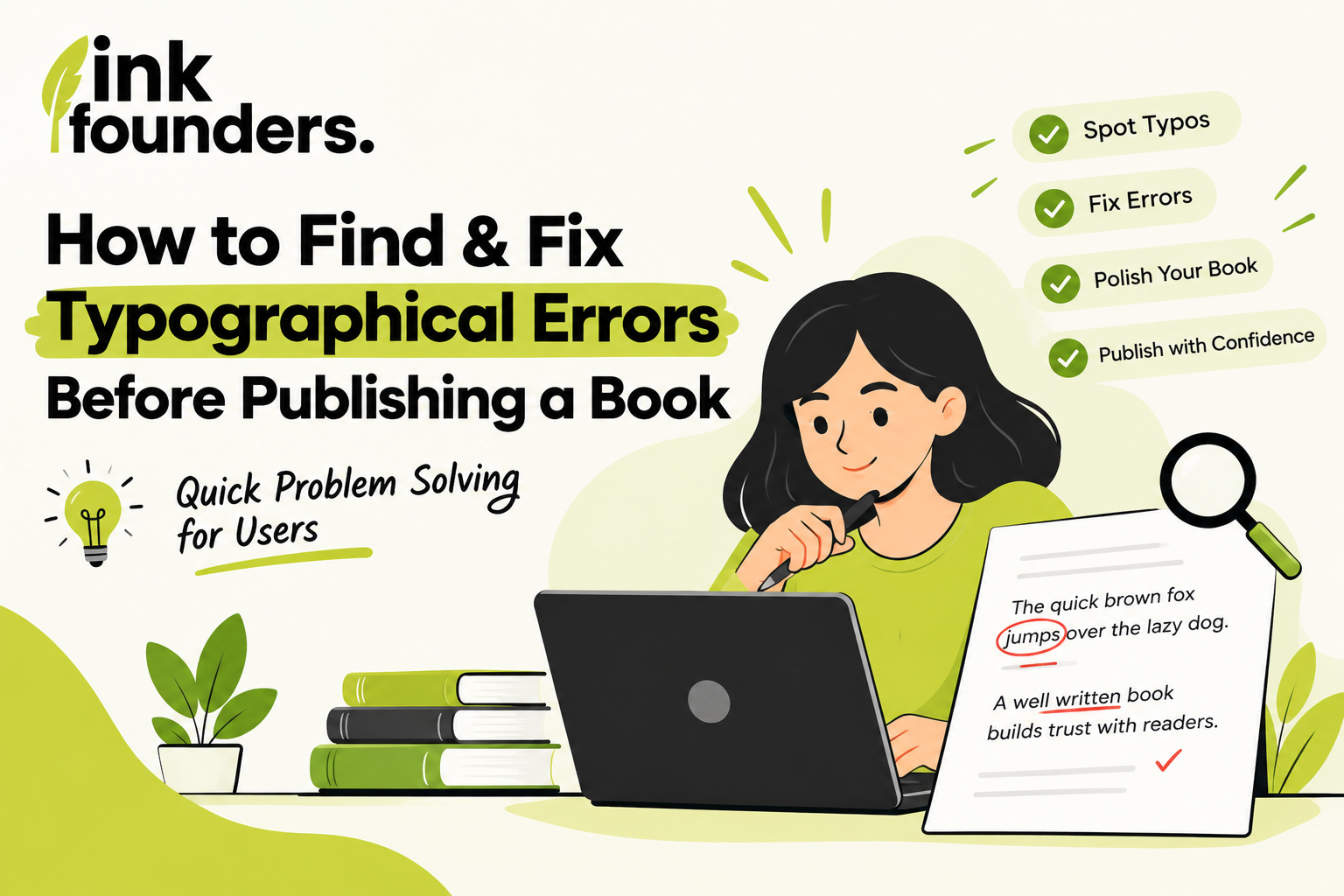
Writing a book takes time, effort, and careful planning. However, even after completing a manuscript, small mistakes can remain in the text. These mistakes may include misspelled words, missing letters, repeated words, or incorrect punctuation. They are known as typographical errors, or typos.
Finding and fixing these errors is an important part of preparing a book for publication. A clean and well written manuscript helps readers understand the content and enjoy a better reading experience.
If you are a new author or an experienced writer, learning how to identify typographical errors can help you prepare your book for publication.
What Are Typographical Errors?
Typographical errors are small mistakes that happen when typing or editing text. They can occur when a letter is missing, a word is typed incorrectly, or punctuation is used in the wrong place.
For example:
Incorrect: The author published a new book.
Correct: The author published a new book.
In this example, the word “published” is missing the letter “i.”
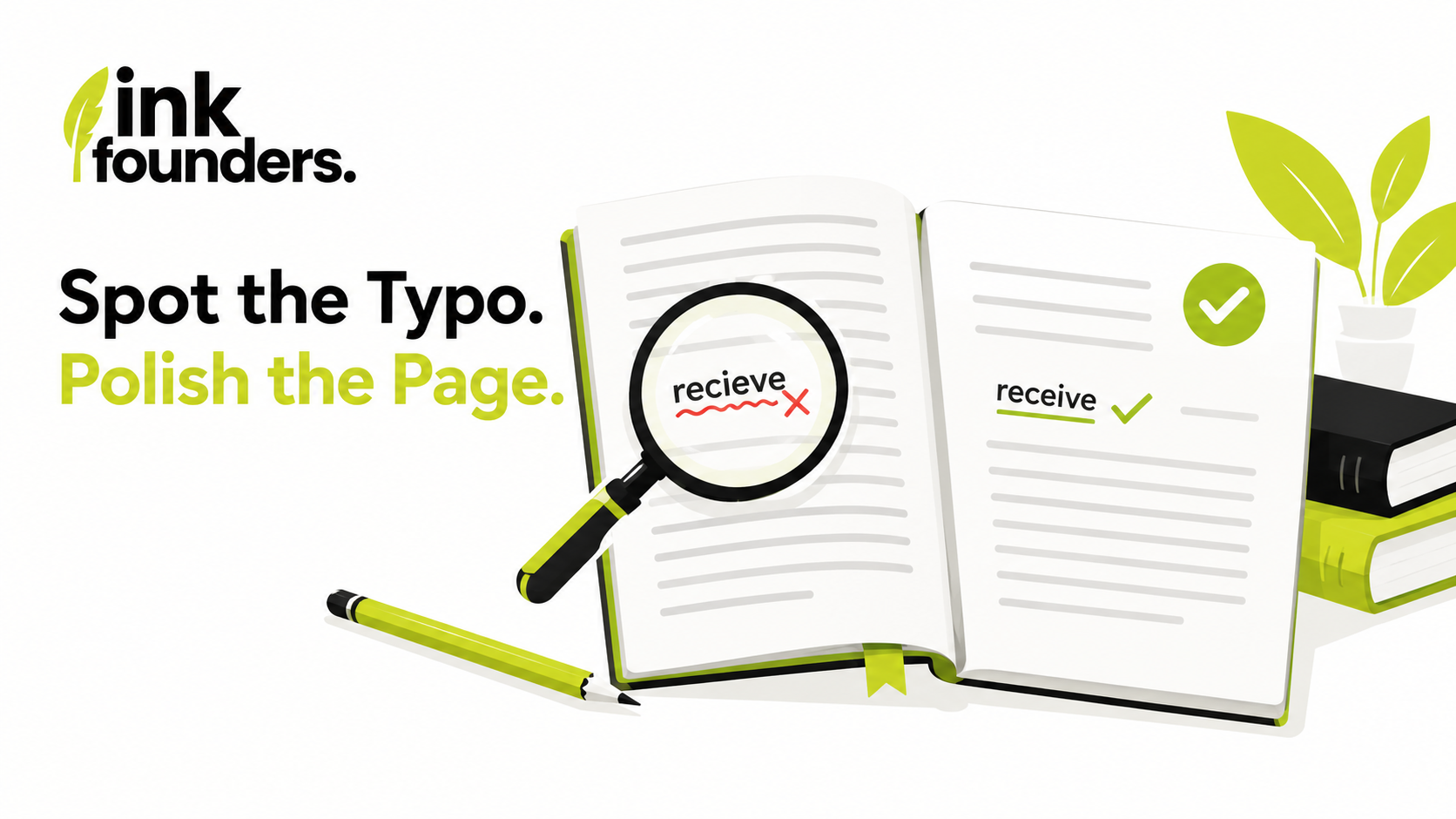
Although this mistake is small, it can affect the quality of the text. Finding these errors before publishing helps make the book easier to read and understand.
Why Are Typographical Errors Important?
Typographical errors may seem minor, but they can affect how readers see your book. Too many mistakes can make the content difficult to read and may give readers a poor impression.

Here are some common problems caused by typographical errors:
- Poor readability: Readers may have difficulty understanding sentences with mistakes.
- Loss of trust: Frequent errors can make a book look less professional.
- Confusing meaning: A missing letter or incorrect word can change the meaning of a sentence.
- Poor presentation: Mistakes can make a carefully written book appear unfinished.
During the book publishing process, checking the manuscript for these errors helps authors prepare content that is clear, accurate, and ready for readers.
Common Types of Typographical Errors
The common typing mistakes can help you find them more easily during proofreading.

1. Spelling Mistakes
Spelling mistakes happen when words are typed incorrectly.
For example:
Incorrect: The auther finished the book.
Correct: The author finished the book.
Reading each sentence carefully and using a spell-checking tool can help you find these mistakes.
2. Missing Letters
Sometimes, a letter is accidentally left out while typing a word.
For example:
Incorrect: The book was succesful.
Correct: The book was successful.
These mistakes can be easy to miss, especially when you are reading your own work.
3. Repeated Words
Repeated words occur when the same word is typed twice by mistake.
For example:
Incorrect: The writer completed the the manuscript.
Correct: The writer completed the manuscript.
Reading your manuscript slowly can help you notice repeated words and other small errors.
4. Punctuation Mistakes
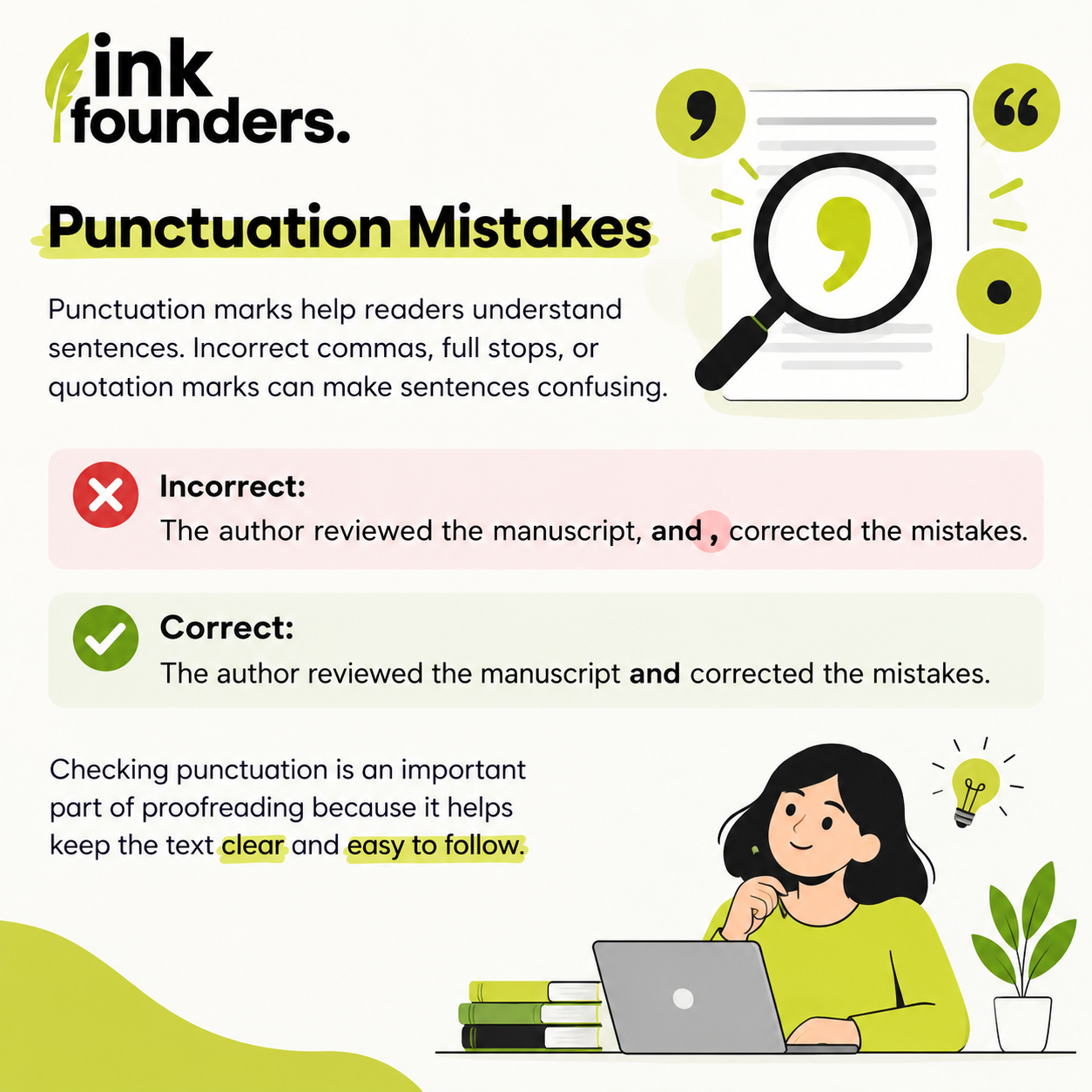
Punctuation marks help readers understand sentences. Incorrect commas, full stops, or quotation marks can make sentences confusing.
For example:
Incorrect: The author reviewed the manuscript, and, corrected the mistakes.
Correct: The author reviewed the manuscript and corrected the mistakes.
Checking punctuation is an important part of proofreading because it helps keep the text clear and easy to follow.
5. Spacing and Formatting Mistakes
Some errors are related to the appearance of the text rather than spelling. These may include extra spaces, missing spaces, uneven paragraph spacing, or incorrect page breaks.
These problems can appear when a manuscript is formatted for print or digital publication. Reviewing the final file helps you find and correct them before publishing.
Need help with your book?